Things to Do in Medina
Where the Prophet's city still answers the dawn call with real faith
Top Things to Do in Medina
Find activities and tours you'll actually want to do. Book through our partners -- no booking fees.


Plan Your Trip
Essential guides for timing and budgeting
Climate Guide
Best times to visit based on weather and events
View guide →Day Trips
The best excursions and nearby destinations worth the journey
Explore day trips →Where to Stay
Best neighbourhoods, hotel picks, and booking tips
Find hotels →Travel Insurance
What's required, what coverage matters, and how to get a quote
Read guide →What to Pack
Climate-specific gear, essentials, and what to leave at home
See packing list →When Should You Visit Medina?
Tap a month for weather, crowds, and highlights
View full year-round climate guide →Your Guide to Medina
About Medina
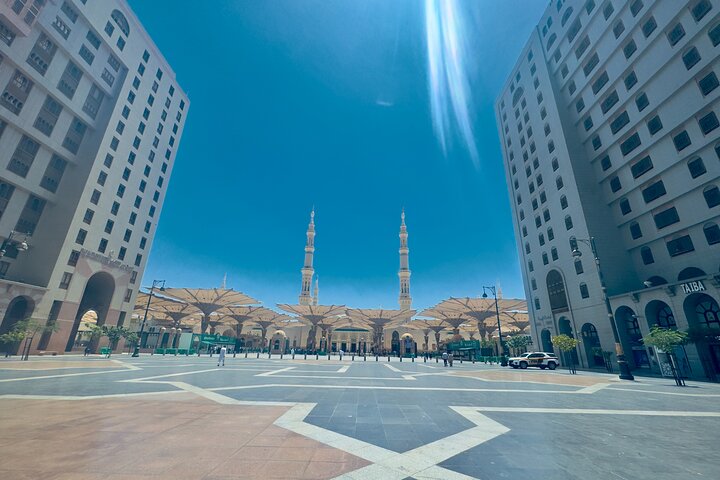
Medina wakes fast. Amplified recitation bursts from Al-Masjid an-Nabawi's minarets at first light and rolls south until Quba and the Date Market tremble with the same Arabic that has polished these stones for 1,400 years. Step off the marble forecourt into Al-Baqi' lanes and the air drops ten degrees, thick with frankincense and tamees bread sliding from clay ovens for pocket change.
White coral-stone walls, carved like lace, frame Souq Al-Baqi', where you haggle for Ajwa dates at local market rates while pilgrims from Jakarta shuffle past in ihram towels. Beyond the ring road, Mount Uhud's volcanic plains glow rust-red at sunset; a taxi costs little and the driver recites battle history whether you ask or not.
The catch? Medina keeps its soul for Muslims. Non-Muslims reach the outskirts, airport hotels, and new malls. Yet the green dome's heart stays respectfully off-limits. That exclusivity is the city's gravity; it keeps devotion tangible, not touristic. Come for the hush after maghrib prayer, when even the Date Market pauses and you hear dates thud onto brass scales.
Travel Tips
Transportation: The SAPTCO green bus from Prince Mohammed bin Abdulaziz International Airport to Al-Masjid an-Nabawi departs every 30 minutes and costs a fraction of private taxi quotes. Inside the Haram zone, everything radiates from the mosque on foot. Electric golf-cart shuttles labeled "Tareeq Al-Haram" are free and circle clockwise until midnight. Download Careem before you land. Drivers rarely accept street hails and increase pricing spikes after prayers. Cars cannot enter the central cordon during prayer times, so schedule pickups at gates 21 or 22 where traffic still flows.
Money: ATMs cluster around Bab al-Salam and Bab al-Baqi' gates. Al-Rajhi Bank has the shortest queues and accepts most foreign cards with a modest fee. Street stalls, even for prayer mats, prefer contactless payment. Yet date sellers near Quba Mosque still deal in cash, keep small bills. Load a Mada card at the airport exchange desk and tap through Haramain High-Speed Rail turnstiles for budget-friendly day trips to Mecca. Ignore scammers selling "special prayer tokens"; the mosque distributes free zamzam water inside.
Cultural Respect: Inside the mosque, phones stay silent and photography stops at the green carpet. Security taps your shoulder if your lens drifts toward worshippers. Men wear long trousers and sleeved shirts. Women need ankle-length abayas, sold near Gate 25 at local prices, and must cover hair, carry a spare scarf because courtyard wind whips everything loose. During prayer, gates seal until the final salam. Non-Muslims who cross the outer cordon face polite but firm escort back to the perimeter. Greet shopkeepers with "As-salamu alaykum" and you get the local price on dates, not the pilgrim markup.
Food Safety: Tamees bread from clay ovens by Bab al-Baqi' is blister-hot and safe. Watch the baker flip with bare hands. Clean fire sterilizes everything. Skip chopped fruit cups in the souq after midday unless they sit in ice. Desert heat ferments melon fast. At the open-air cafeteria behind the Hilton Garden Inn, a lamb kabsa plate runs mid-range and rice steams fresh every fifteen minutes. Buy ajwa dates from the cooperative stall opposite Gate 6. They vacuum-seal onsite, last six weeks, and no duty officer questions them on exit.
When to Visit
January mornings are crisp at 17-22°C (63-72°F) and feel almost Levantine. Hotel rates near the mosque drop sharply after Hajj demand fades. By March, temperatures hit 28°C (82°F) and the city wakes for Umrah season. Expect higher room rates and longer queues at the Rawdah shrines after fajr. April through early May is the sweet spot: 30-35°C (86-95°F) days, clear skies, moderate crowds, and mid-range hotels at reasonable prices.
Ramadan, lunar and often March-May, compresses daytime life yet erupts at sunset. Iftar tents feed anyone for free though half the restaurants stay shut until taraweeh ends. June through August is brutal at 42°C (108°F); heat shimmers off marble, air-conditioned malls become refugee camps, and even five-star properties slash prices to lure pilgrims.
September cools to 38°C (100°F) but dust storms turn golden hour sepia. October surprises with 32°C (90°F) days, cool nights, and hotel prices still below winter levels. November through December is peak season; 25-28°C (77-82°F) weather pulls Gulf families, flights from Riyadh double, and mosque courtyards swell shoulder to shoulder.
Budget travelers aim for the week after Hajj in early January. Luxury seekers book October for empty five-star lounges at shoulder-season rates.
More Ways to Experience Medina
Tours, day trips, and local experiences curated by on-the-ground operators.
Didn't see anything interesting yet?
Browse Viator's full catalog of tours, day trips, food experiences, and private guides in Medina.
See All Medina Tours on Viator